
Why Brands Are Going Offline Again, and How AI Makes Physical Marketing Smarter Than Digital

Digital ad fatigue is pushing brands back to physical touchpoints: 7 in 10 marketers plan to increase physical investment, and global experiential marketing spend hit $128.4 billion in 2024, surpassing pre-pandemic levels for the first time
77% of Gen Z and Millennials have planned outings specifically around a store or brand experience; 80% of consumers say in-person experience is the most trusted way to discover new products
The problem has never been whether physical marketing works. It is whether physical touchpoints can generate the data and personalization that digital channels can
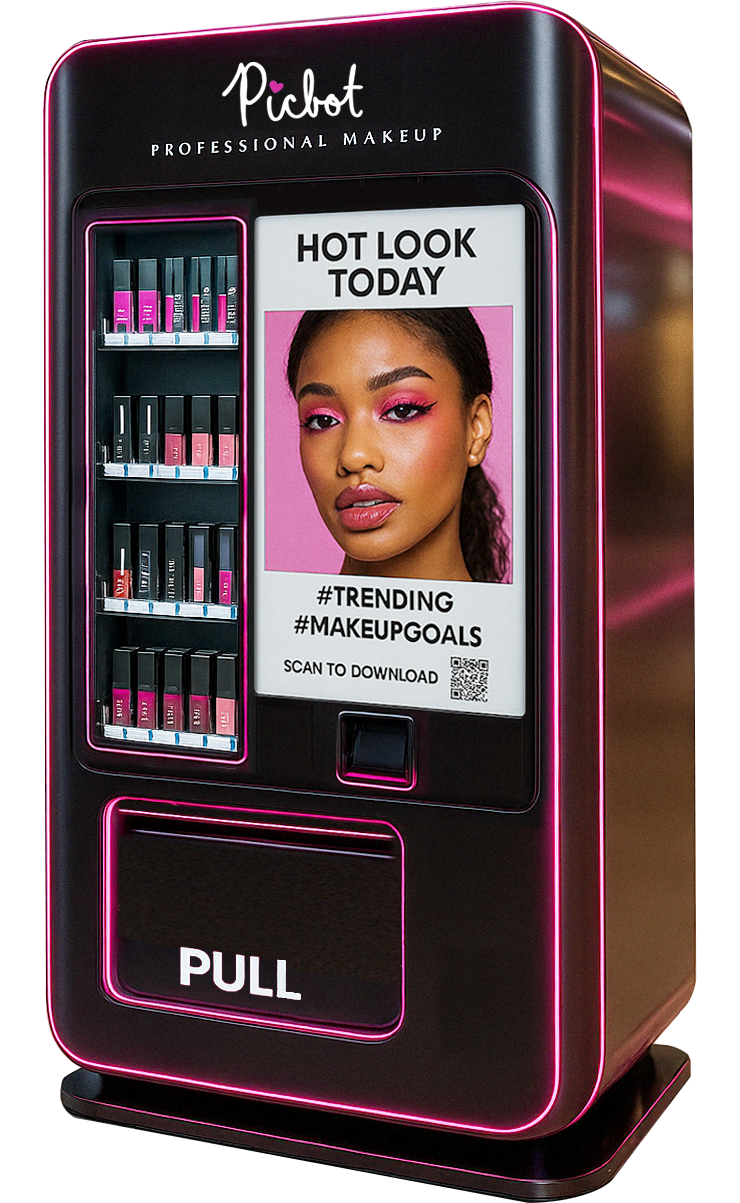
Speed 3D Inc.'s anamorphic 3D ads create viral social reach from physical deployments; Picbot Beauty captures first-party consumer data during in-store interactions
Together, the two create a measurable, AI-powered physical marketing loop: attention, interaction, purchase, data
The Digital Fatigue Problem
Consumers are exposed to more digital ads than at any point in history, and they are responding by tuning out.
Social media algorithms have made organic brand reach increasingly difficult to sustain. Email open rates have declined year on year for a decade. Online display ad click-through rates sit at fractions of a percent. Consumers install ad blockers, or simply scroll past without a glance.
The deeper structural shift is this: digital-native consumers, the Gen Z and Millennials who grew up on screens, are now actively craving real, tangible, off-screen experiences. Research from The Harris Poll found that 76% of Americans connect more deeply with brands through in-person retail experiences.
This is not nostalgia. It is a behavioral market shift with clear spending data behind it.
The Market Is Already Moving
Global experiential marketing spend reached $128.4 billion in 2024, surpassing pre-pandemic levels for the first time. B2C companies spent an estimated $90.3 billion that year, a 10.3% increase year-on-year. B2B companies spent $38 billion, up 11%.
Looking ahead, 51% of companies plan to increase experiential marketing investment from 2024 through 2026. 74% of Fortune 1000 marketers plan to increase experiential marketing budgets in 2025 and 2026. Event budgets are growing at 10.9% for 2025/26, against a 3.1% decline in overall B2B marketing spend.
Consumer behavior reflects the same direction. 92% of consumers prefer in-person events within an hour's travel. 80% say in-person experience is the most trusted way to discover new products and services. 77% of Gen Z and Millennials have planned travel or outings around visiting a specific store or branded location. 73% say shopping at a pop-up or brand event feels like being part of a cultural moment.
Physical marketing is not coming back out of sentiment. It is coming back because the data says it works.
The Real Problem With Physical Marketing Has Never Been Effectiveness
Traditional physical marketing has had one persistent, legitimate weakness: you know what you spent, but you rarely know what happened.
A billboard, a pop-up activation, a product sampling event. How many consumers engaged? Who were they? What did they try? What did they buy? What did they share?
In a purely physical environment, most of these questions go unanswered. It is a significant reason why brands shifted so heavily toward digital channels over the past decade: digital advertising can at least be tracked.
AI is now changing that equation.
How AI Gives Physical Marketing the Data Capabilities of Digital
When physical marketing touchpoints have AI embedded in them, they stop being pure exposure tools and become measurable consumer interaction platforms.
For brands, this shift means three things:
Physical experiences can be personalized. An AI-powered interactive system can deliver personalized content or recommendations based on real-time consumer preferences, not unlike digital targeting.
Physical touchpoints can capture first-party data. As third-party cookies disappear and brands urgently need first-party data assets, physical interactions are becoming an important collection channel.
Physical experiences can amplify organically into social media. A well-designed physical activation generates content that consumers voluntarily record and share to TikTok and Instagram, creating earned reach without additional media spend.
This is why 85% of marketers are using technology to enhance their experiential campaigns, and why AR product experiences deliver 200% more engagement than non-AR equivalents.
How Speed 3D Connects Both
Speed 3D Inc.'s two core services map directly onto the two layers of this physical marketing upgrade.
Anamorphic 3D advertising: making physical reach extend into digital channels automatically
Speed 3D's anamorphic 3D outdoor campaigns are designed not just to attract foot traffic, but to create visual moments worth recording and sharing.
When a Maybelline foundation ad appears to break out of a screen at Watson's Ximending, or a La Roche-Posay product appears to float above pedestrians at Shin Kong Mitsukoshi A9 in Xinyi, passersby stop. They film it. They share it to TikTok and Instagram.
One physical deployment. Multi-channel brand exposure. No additional media spend.
Picbot Beauty: making physical interactions generate first-party data
Picbot Beauty captures consumer preference and behavior data during every interaction: product category try-on preferences, selection paths, conversion rates. For brands accustomed to near-zero physical retail data, this is a meaningful shift. The data is captured at the moment of interaction, making it more accurate and contextually relevant than post-purchase surveys or sales records alone.
Integrated deployment: the full funnel in one location
At Watson's Ximending in early 2026, Speed 3D deployed both together for Maybelline: anamorphic 3D on the display screen, Picbot Beauty on-site. The anamorphic ad pulled attention. The Picbot converted that attention into interaction, purchase, and data.
Attention. Interaction. Purchase. Data. No staff required at any stage.
What This Means for Brand Marketing Strategy
Offline and online are no longer competing channel choices. The most effective brand strategies in 2026 connect physical and digital into one unified story.
Physical spaces are becoming content engines. Every in-person activation is designed to generate moments consumers want to capture, share, and talk about. If they are not talking, the brand is invisible beyond the immediate location.
For physical marketing to justify its investment in a data-driven marketing environment, physical touchpoints need three things:
Enough visual impact that consumers voluntarily record and share the experience
Enough interactive depth that consumers stay, engage, and leave a data trace
A short enough conversion path that purchase happens at the moment of engagement
When all three conditions are met, physical marketing ROI can be measured, optimized, and defended to stakeholders. It stops being a black box.
FAQ
Q: Why are brands returning to offline and physical marketing? Digital ad fatigue, declining algorithm reach, the loss of third-party cookies, and strong consumer demand for real-world experiences are all pushing brands to reinvest in physical touchpoints. Global experiential marketing spend reached $128.4 billion in 2024, surpassing pre-pandemic levels for the first time.
Q: How does AI make physical marketing smarter? AI gives physical touchpoints personalization capability, data collection capability, and viral amplification design. AR product experiences deliver 200% more engagement than non-AR equivalents. AI-powered in-store activations capture first-party consumer data in real time, which is difficult to collect through traditional physical retail.
Q: What services does Speed 3D offer for physical marketing? Speed 3D Inc. provides anamorphic 3D advertising production and deployment (end-to-end, from creative content to on-site screen), and the Picbot Beauty AI smart beauty vending machine (integrating AI virtual try-on, personalized recommendations, and real-time purchase). Both can be deployed independently or combined in the same location.
Q: What types of campaigns is this suited for? Product launches, pharmacy and department store channel activations, pop-up retail, and brand experience events, particularly for beauty, personal care, and fashion brands.
Q: How do we get in touch with Speed 3D? Email contact@spe3d.co with your brand name and the activation you are exploring. The team will follow up to discuss options and timelines.
About Speed 3D Inc.
Speed 3D Inc. (啟雲科技股份有限公司) was founded by Marvin Chiu, Founder & CEO, in 2014, and is headquartered in Taiwan. The company provides anamorphic 3D advertising production and deployment, and the Picbot Beauty AI smart beauty vending machine. In 2025, Speed 3D was selected as a winner of L'Oréal Group's BIG BANG Beauty Tech Open Innovation Program (North Asia region) and a Top 10 finalist for the Qualcomm Innovate in Taiwan Challenge (QITC 2025). The company operates in Taiwan and is actively expanding into Hong Kong, South Korea, and the United States.
Business inquiries: contact@spe3d.co

I’ve been researching ways to improve the accuracy of AI-powered knowledge systems, and this overview really helped me understand how Retrieval-Augmented Generation can reduce hallucinations by grounding responses in trusted business data. I especially liked the practical focus on customization and seamless integration with existing workflows. If anyone is exploring enterprise AI solutions, I’d recommend reading https://www.abtosoftware.com/services/rag-development-services for a clear explanation of what an effective RAG implementation should include.