
AI image generation isn't just in the cloud: how brands are choosing edge AI, cloud, and hybrid for retail and event activations

AI image generation has moved from research into live brand activations and physical retail deployments
Cloud-based generation offers model flexibility and compute power but introduces latency, network dependency, and data privacy considerations
On-device (edge) AI generation runs inference locally — faster, privacy-safer, and resilient in variable-connectivity venues
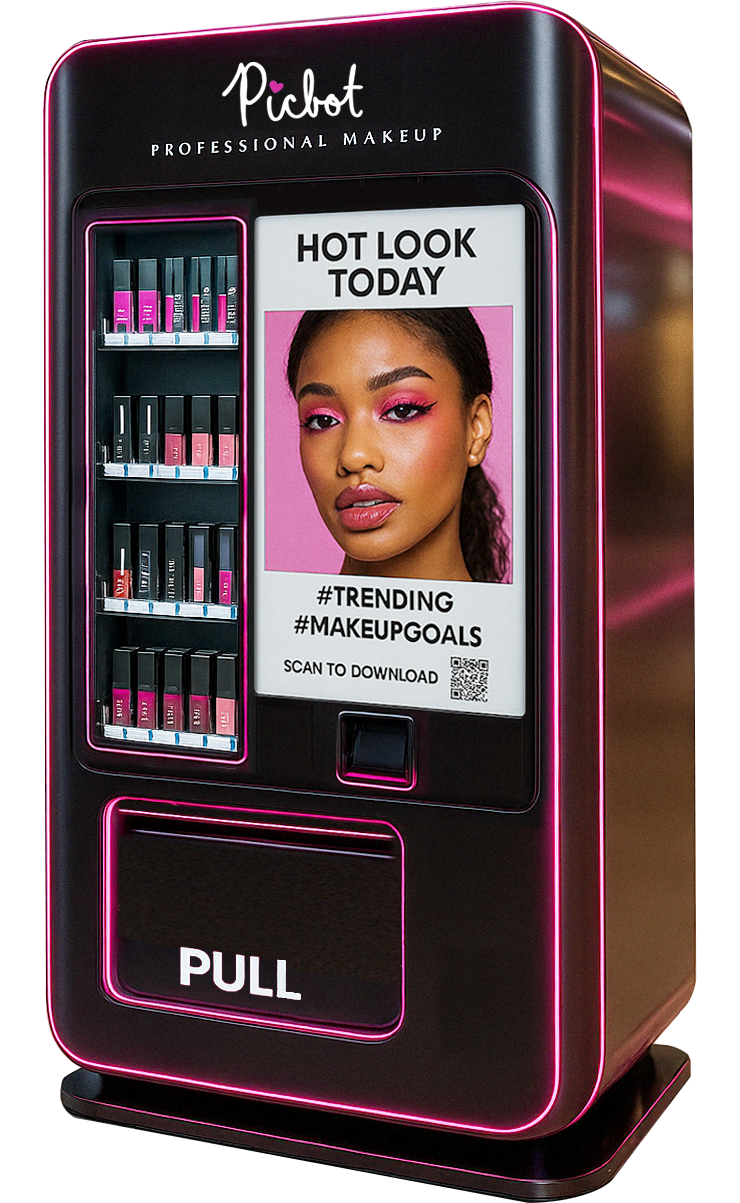
Speed 3D's Picbot Edge runs diffusion inference on Qualcomm Snapdragon X Elite in under 30 seconds on-device, with cloud available as a complementary option
Hybrid architecture is the practical deployment answer: choose the path that fits the venue
AI image generation has arrived on the event floor
Two years ago, AI image generation was a conversation within technology communities. Today it is deployed at brand pop-ups, shopping mall interactive installations, and exhibition experience zones.
The consumer appeal is direct: stand in front of a camera, and within seconds receive a stylized portrait with your own face — or see yourself wearing a brand's product through AI try-on. This kind of personalized, real-time generative experience is something previous forms of brand interaction struggled to deliver at scale.
The first technical decision brands face when planning these deployments: where does the AI generation actually run?
Cloud generation: strong compute, real trade-offs
Cloud-based AI image generation is the most widely adopted architecture today. Brands call a remote server via API, cloud GPU infrastructure completes the diffusion inference, and the result is returned to the on-site device.
The advantages of cloud are real: access to larger models requiring substantial compute, elastic scaling, and no need for high-spec hardware at the event venue itself.
But in live brand activation contexts, cloud generation carries three practical limitations:
Latency: From photo capture to delivering a generated result, cloud-based solutions typically take 60 seconds or more — longer during peak loads. For a queue of consumers, this is a meaningful experience bottleneck.
Network dependency: Exhibition halls, underground retail spaces, and outdoor event venues frequently have unreliable connectivity. Cloud generation stops working when the network does.
Data transmission: Consumer facial images must be uploaded to a remote server for processing — raising data privacy compliance considerations in some markets and regulatory environments.
On-device AI generation: fast, private, venue-resilient
On-device (edge) AI generation means all inference runs on local hardware at the venue — no data leaves the device for the generation process.
Speed 3D's Picbot Edge runs on the Qualcomm Snapdragon ecosystem. The full diffusion pipeline executes on the device's Hexagon NPU via the Qualcomm QNN framework at FP16 precision. Generation completes in under 30 seconds — a meaningful improvement over the 60+ seconds typical of cloud alternatives.
This pipeline was not a straightforward integration. Speed 3D's engineering team rebuilt the entire diffusion workflow to run stably on Snapdragon NPU, integrating ControlNet and fine-tuned style models (including realistic oil painting and watercolor artistic styles). To preserve facial recognizability after stylization, the system includes AI Face Parsing and structure-preservation mechanisms that maintain subject identity through the generative process.
The practical on-device advantages in event deployments:
No network dependency: The system operates normally in underground venues, outdoor locations, or anywhere with poor connectivity
Faster consumer throughput: Under-30-second generation reduces queue wait time and increases the number of consumers served per hour
Data stays on device: Facial images are processed locally and not transmitted to external servers, reducing privacy compliance exposure
One accurate caveat: when consumers retrieve their generated result via QR code, a mobile internet connection is still required to download the image file. AI generation is fully on-device; result delivery is not.
Hybrid architecture: the practical deployment reality
Edge AI and cloud each have their natural use cases. In real-world brand deployments, the choice is rarely binary.
Hybrid architecture uses on-device AI as the primary generation path — ensuring speed and stability at the venue — with cloud as a complementary option for specific needs. Examples:
On-site generation: Picbot Edge handles the consumer-facing experience, fast and privacy-safe
High-resolution post-processing or specialized models: Cloud APIs provide access to larger compute when higher model capability is needed
Multi-venue deployments: Cloud infrastructure manages style model updates and content versioning across multiple on-site devices
This approach lets brands adapt to venue conditions, network environment, and budget rather than committing to a single technical path that may not fit every activation context.
FAQ
Q: What are the most common AI image generation applications at brand events? A: The most common deployments are personalized portrait generation (consumers receive an artistic image featuring their own face), AI virtual try-on (brand makeup or clothing overlaid on the consumer's image), and event-exclusive style cards (themed portrait effects). All outputs are delivered via QR code for consumers to save and share.
Q: What hardware does on-device AI image generation require? A: Picbot Edge uses the Qualcomm Snapdragon ecosystem, which includes a built-in Hexagon NPU capable of running diffusion inference without a discrete GPU. The hardware is integrated into the Picbot device — brands do not need to source or configure hardware independently.
Q: Is there a quality difference between cloud-generated and on-device AI images? A: Quality depends on the model and pipeline design, not the architecture alone. Picbot Edge uses FP16 diffusion models, which preserve sufficient detail and facial recognizability for portrait stylization. For specific high-complexity generation tasks, larger cloud models offer greater flexibility. Both have appropriate use cases.
Q: How is consumer facial data handled in on-device AI generation? A: With Picbot Edge, facial image processing is completed on the local device and not transmitted to external servers. When consumers download their generated result via QR code, the image file is transferred over mobile internet — but the original facial data does not leave the device.
Q: Does Speed 3D offer both cloud and on-device AI generation solutions? A: Yes. Speed 3D provides on-device AI generation via Picbot Edge (Snapdragon chip) and cloud-based generation options, and can support hybrid architecture planning based on a brand's specific venue and deployment requirements.
About Speed 3D Inc.
Speed 3D Inc. (啟雲科技股份有限公司) was founded by Marvin Chiu, Founder & CEO, in 2014 and is headquartered in Taipei, Taiwan. The company specializes in AI computer vision, edge AI, and SW/HW integration, with a proprietary face landmark model patented in Taiwan, the USA, Japan, and China. Speed 3D is an official Qualcomm AI PC Track software provider. Picbot Edge runs diffusion inference on Qualcomm Snapdragon X Elite, completing AI image generation in under 30 seconds on-device. Speed 3D received MODA AI company certification in 2022 and won the L'Oréal BIG BANG North Asia regional award in 2025.
Contact: contact@spe3d.co
Comments